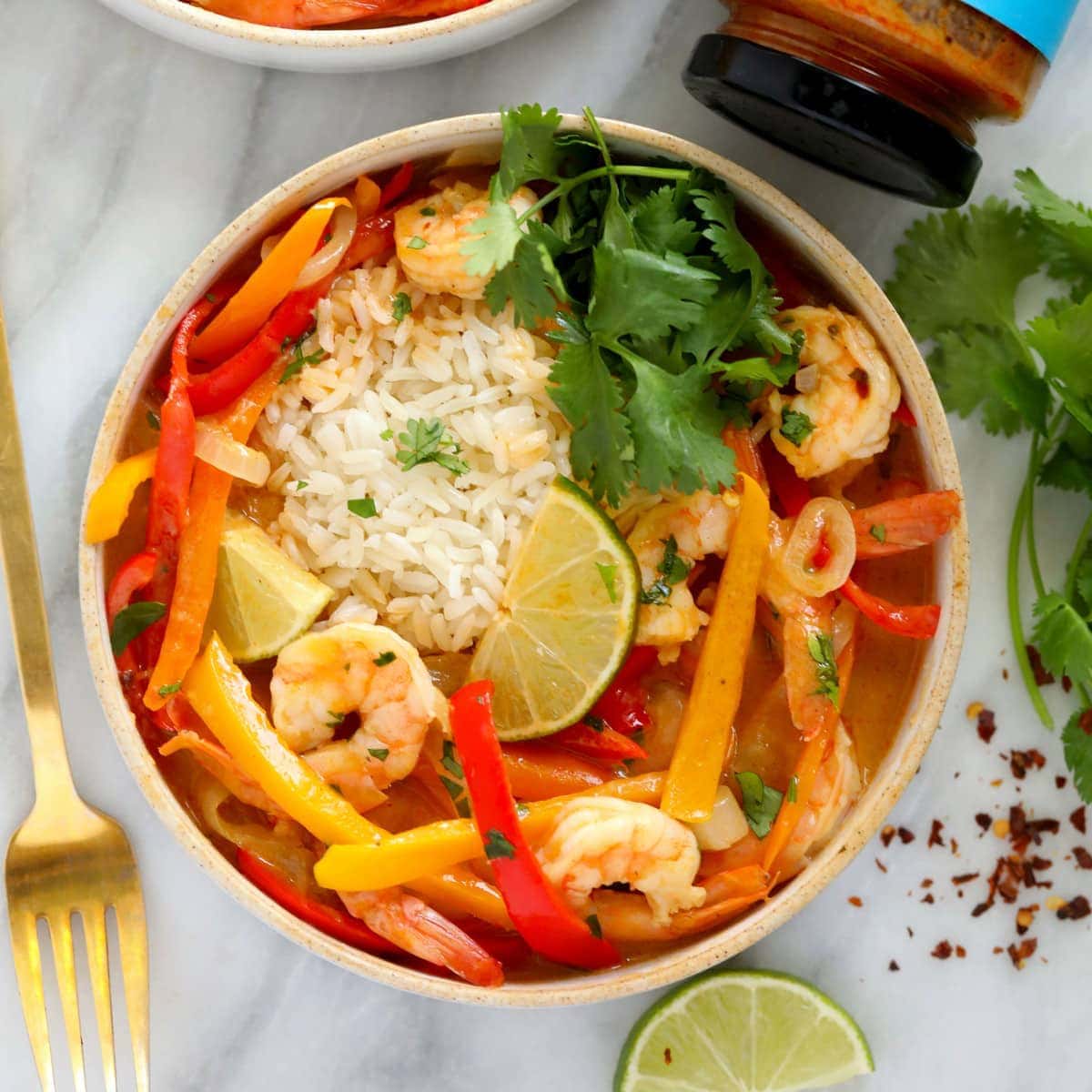
The Allure of an Easy Shrimp Panang Curry
In the whirlwind of busy weeknights, finding a meal that's both incredibly flavorful and quick to prepare often feels like an impossible dream. Enter the easy shrimp Panang curry recipe – a vibrant, aromatic Thai dish that promises a gourmet experience without the lengthy cooking time. Imagine a rich, creamy, and perfectly balanced curry on your table in under 30 minutes, all thanks to a clever semi-homemade approach. It's the kind of meal that tastes like it simmered all day, yet fits effortlessly into your hectic schedule.
Panang curry, sometimes spelled Phanaeng, stands out among Thai curries for its distinct profile. Hailing perhaps from the island of Penang, it's known for being less fiery than its red or green counterparts, offering a harmonious blend of sweet, savory, and nutty notes. Its signature richness comes from creamy coconut milk, infused with a complex paste typically featuring red chilies, galangal, lemongrass, kaffir lime leaves, and a hint of roasted peanuts. When combined with succulent shrimp and your choice of fresh vegetables, it transforms into an unforgettable culinary journey, even for the most novice home cook. For more insights into whipping up this delicious meal quickly, check out our guide on Whip Up Flavorful Shrimp Panang Curry in Under 30 Mins.
Beyond the Basics: Elevating Your Easy Shrimp Panang Curry Recipe
While the beauty of an easy shrimp Panang curry recipe lies in its simplicity, relying on quality store-bought simmer sauces or curry pastes, there's immense joy in making it truly your own. Customization is where this dish shines, allowing you to tailor flavors, textures, and nutritional content to your exact preferences. Let's dive into how you can transform a great base into an extraordinary meal.
Veggie Power-Up: Adding Color and Nutrition
The foundation of any good curry is a medley of fresh vegetables, not just for nutrition but for adding diverse textures and flavors. While peppers and onions are common, the possibilities are vast. Remember to consider cooking times – harder vegetables like potatoes or carrots should go in earlier, while tender greens can be added at the end.
- Bell Peppers: Red, yellow, or orange bell peppers add sweetness and vibrant color.
- Onions: Yellow or red onions provide a sweet and pungent base.
- Green Beans or Snap Peas: For a delightful crunch and fresh green hue.
- Zucchini or Yellow Squash: Soften beautifully and absorb the curry flavors.
- Bamboo Shoots: A classic Thai addition, offering a unique texture.
- Baby Corn: Adds a sweet crunch and visual appeal.
- Spinach or Bok Choy: Stir in at the very end until just wilted for a boost of greens.
- Diced Potatoes or Sweet Potatoes: If you prefer a heartier curry, these add substance and natural sweetness, just ensure they are cooked through.
Crafting Your Signature Flavor Profile
Even when using a pre-made sauce, you have the power to fine-tune the taste of your easy shrimp Panang curry recipe. Think of the simmer sauce as a canvas, and you're the artist adding the finishing strokes.
- Spice Level Adjustment: If you like more heat, a pinch of red chili flakes, a dash of Sriracha, or even a few thinly sliced fresh bird's eye chilies can kick things up a notch. For a milder version, a little extra coconut milk can help.
- Aromatic Boost: Fresh aromatics can elevate the pre-made paste. Sautéing a bit of freshly minced garlic, grated ginger, or finely chopped lemongrass with your vegetables before adding the sauce will infuse the curry with incredible depth. A few bruised kaffir lime leaves, added during simmering, will release a wonderfully fragrant citrus note.
- Sweet and Savory Balance: Panang is known for its sweet-savory harmony. A tiny bit of palm sugar (or brown sugar) can enhance the sweetness, while a splash of fish sauce will deepen the savory umami notes without making it taste "fishy." A squeeze of fresh lime juice at the end brightens everything.
- Nutty Nuance: Panang curry traditionally has a subtle peanut flavor. Stirring in a tablespoon of creamy peanut butter (all-natural works best) with the coconut milk can enhance this, or you can opt for a sprinkle of crushed roasted peanuts as a garnish.
The Perfect Finish: Garnishes and Toppings
Garnishes aren't just for show; they add contrasting textures, bursts of freshness, and final layers of flavor that complete your easy shrimp Panang curry recipe. Don't skip this crucial step!
- Fresh Herbs: A generous handful of fresh cilantro or sliced green onions adds a vibrant, herbaceous lift.
- Citrus Zest and Juice: A final squeeze of fresh lime juice and a sprinkle of lime zest can dramatically brighten the dish.
- Crunchy Nuts: Toasted peanuts or cashews provide a fantastic textural contrast and nutty flavor.
- Crispy Shallots or Fried Garlic: For an authentic Thai touch and irresistible crunch.
Serving Your Masterpiece: What to Pair with Your Easy Shrimp Panang Curry
Once your customized easy shrimp Panang curry recipe is ready, the next step is deciding how to serve it. The rich, saucy nature of the curry makes it incredibly versatile.
- Steamed Jasmine Rice: The classic pairing. Its fragrant, fluffy texture is perfect for soaking up every drop of delicious sauce.
- Brown Rice or Quinoa: For a healthier, whole-grain option that adds a slightly nutty flavor.
- Cauliflower Rice: An excellent low-carb alternative that still provides a neutral base for the curry.
- Naan Bread or Roti: Warm, soft flatbreads are ideal for dipping and scooping up the savory sauce.
- Noodles: Rice vermicelli or wider rice noodles can turn your curry into a delightful noodle bowl.
- Eat It Alone: For a protein-packed, vegetable-rich meal, sometimes the curry is satisfying enough on its own!
Pro Tips for Your Easy Shrimp Panang Curry Journey
To ensure every batch of your easy shrimp Panang curry recipe is a success, keep these practical tips in mind.
Ingredient Swaps and Adaptations
The beauty of curry lies in its flexibility. While shrimp is fantastic, you're not limited to it.
- Other Proteins: Panang curry is delicious with chicken, tofu (firm or extra-firm), beef (sliced thin), pork, or mixed vegetables. Adjust cooking times accordingly – chicken or beef will need longer than shrimp, while tofu just needs to be heated through.
- Good Quality Sauce/Paste: The quality of your store-bought Panang curry simmer sauce or paste makes a big difference. Brands like Good & Gather (as mentioned in the reference) or specific Thai brands found in Asian markets often yield the best results. For more on using simple ingredients for big flavor, read Easy One-Pot Shrimp Panang Curry: Simple Ingredients, Big Flavor.
Storage and Reheating Best Practices
Leftovers are often just as good, if not better, the next day, as the flavors have more time to meld.
- Refrigeration: Your Panang curry will keep well for 3-5 days in an airtight container in the refrigerator.
- Freezing (with caution): While many curries freeze well, this particular recipe, especially with shrimp and coconut milk, is generally not recommended for freezing. The texture of the shrimp can become rubbery, and the coconut milk might separate or become grainy upon thawing and reheating. If you must freeze, consider making a larger batch of just the curry sauce (without shrimp) and adding freshly cooked shrimp when reheating.
- Reheating: Gently reheat on the stovetop over medium-low heat, stirring occasionally, until warmed through. You might need to add a splash of water or extra coconut milk if the curry has thickened too much in the fridge.
The easy shrimp Panang curry recipe is more than just a quick meal; it's an invitation to explore and personalize. With its forgiving nature and robust flavors, it provides a fantastic base for culinary creativity. So, go ahead – experiment with new vegetables, play with the spice levels, and discover your perfect Panang curry creation. It's a dish that truly delivers on taste, convenience, and endless possibilities for customization.
